
At the core of the mid-century modern philosophy is the belief that a home should be an honest expression of its structure, celebrating the materials from which it is built rather than hiding them behind decorative facades. This approach rejects the idea that a house must be a fortress, opting instead to create permeable boundaries that allow light, air, and nature to flow freely through the living areas. By utilizing post-and-beam construction, designers were able to free the floor plan from the constraints of load-bearing walls, allowing for the open-concept living that we now take for granted. It is a philosophy that honors the human need for both social interaction and personal solitude, providing a container for life that is as adaptable and forward-thinking as it is warm, grounded, and deeply human.
1.) The Flat-Roof Pavilion


The flat-roof pavilion design is the quintessential symbol of the modernist aesthetic, characterized by its low-slung, horizontal profile that seems to hug the earth with grace and purpose. By avoiding the heavy, peaked roofs of more traditional homes, this design creates a sleek silhouette that blends effortlessly into the surrounding landscape. The flat roofline emphasizes the geometric clarity of the structure, allowing the house to appear as a series of simple, interlocked planes. This look is perfect for those who appreciate a home that feels unassuming from the exterior yet offers a sophisticated, uncluttered, and highly intentional spatial experience within its interior rooms.
2.) The Post-and-Beam Framework
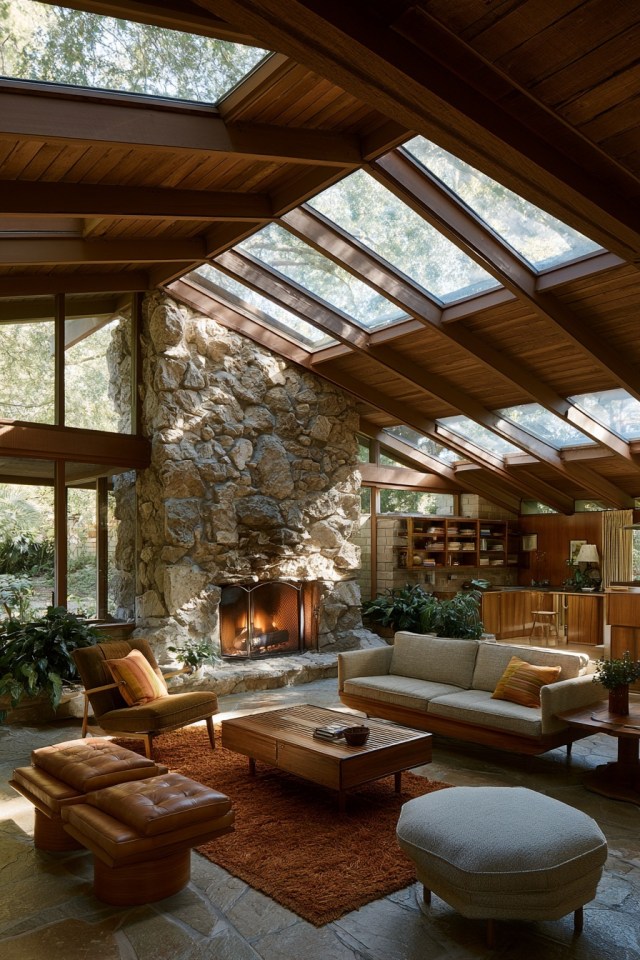

The post-and-beam method of construction is the secret behind the airy, open feel of these iconic homes, as it removes the need for bulky, room-dividing walls. By exposing the structural framework, the architecture creates a beautiful, repetitive rhythm that draws the eye and adds a layer of tactile, natural texture to the ceiling. This style allows for a completely flexible floor plan, enabling the homeowner to organize their space in a way that suits their personal habits rather than being dictated by rigid architectural boundaries. It is a brilliant way to showcase the skeleton of the house as a primary design feature.
3.) The Floor-to-Ceiling Glass Wall


There is no feature more defining of this architectural style than the massive, floor-to-ceiling glass wall that completely erases the barrier between the interior living space and the outdoor garden. This design choice does more than just let in light; it actively pulls the landscape inside, making the trees, the sky, and the changing seasons a part of your daily decor. By treating the glass as a primary material, the house feels light, transparent, and perpetually connected to the environment, creating a sense of freedom that is rarely found in traditional, more closed-off architectural styles.
4.) The Split-Level Layout


The split-level home is a masterpiece of vertical organization, providing distinct zones for different activities while maintaining a sense of cohesion and flow. By utilizing small sets of stairs to separate the living areas, the kitchen, and the private bedrooms, the architecture creates a layered experience that feels dynamic and interesting. This design is particularly effective for sloped lots, allowing the house to follow the natural terrain of the site rather than forcing the land to conform to the structure. It creates a feeling of separation without isolation, giving every part of the home its own unique character.
5.) The Dramatic Butterfly Roof


The butterfly roof, characterized by two planes that angle upward toward the center, is a bold architectural statement that transforms the home into a piece of sculpture. This design does more than look visually striking; the shape is highly functional, as it allows for the installation of large, high windows that flood the home with sunlight while collecting rainwater toward the center. It creates a sense of soaring height and drama, making the interior feel much larger and more open than it might otherwise. It is a fantastic choice for those who love geometry and want their home to stand out.
6.) The Clerestory Window Strip


Clerestory windows, which are the narrow strips of glass placed high up on the wall just below the roofline, are a genius solution for bringing in light while maintaining total privacy. By allowing sunlight to wash down the interior walls, these windows create a soft, glowing atmosphere that changes throughout the day without the need for blinds or heavy curtains. They accentuate the height of the ceiling and give the roof the appearance of floating above the walls. This design provides a beautiful, indirect illumination that makes the home feel serene, protected, and incredibly bright.
7.) The Private Courtyard Entry


Many mid-century designs prioritize the inward-facing courtyard, creating a hidden oasis of calm that provides a peaceful buffer between the busy street and the private home. This entry style encourages a moment of transition, where you pass through a gate or a solid front wall into a lush, planted space before entering the actual house. The courtyard becomes an extension of the living room, a protected outdoor room that can be used for quiet morning coffee or evening relaxation. It turns the home into a private sanctuary, prioritizing the quality of the internal environment above all else.
8.) The Natural Stone Feature Wall


Bringing the outdoors inside is a central tenet of the modernist aesthetic, and the natural stone feature wall is one of the most effective ways to achieve this. Whether it is a massive fireplace surround made of local river rock or a wall of slate that continues from the exterior to the interior, the stone adds a rugged, tactile weight that balances the sleekness of glass and steel. This material contrast creates a sense of warmth and permanence, grounding the airy, modern structure in the ancient, earthy reality of the site and making the home feel exceptionally sturdy.
9.) The Cantilevered Deck


The cantilevered deck is a brilliant structural trick that makes it appear as though the home is hovering above the landscape, projecting out into the air without the need for visible supports. This design element provides a thrilling sense of elevation, allowing you to walk out from the living area and feel as if you are suspended in the canopy of the trees. It creates a perfect transition space for outdoor entertaining, offering an unobstructed view of the terrain below. The cantilever adds a touch of architectural daring, proving that form and function can coexist in a surprisingly elegant way.
10.) The Exposed Beam Ceiling


The exposed beam ceiling is a classic mid-century touch that adds immense character, depth, and a sense of history to any room. By leaving the wooden structural beams visible, the design highlights the craftsmanship that went into building the home and adds a layer of rustic warmth that contrasts beautifully with clean, white walls. This feature draws the eye upward, making the room feel taller and more expansive. It also provides a great opportunity to introduce natural wood tones into the color palette, creating a cozy, lodge-like feel within a modern, geometric framework.
11.) The Indoor-Outdoor Fireplace


The fireplace is the heart of any mid-century home, and the indoor-outdoor variety is the ultimate expression of the style’s commitment to blurring boundaries. By placing the fireplace on a shared wall that passes through the glass, the home creates a seamless visual and functional connection between the living room and the patio. It is a brilliant design that allows for year-round enjoyment of the hearth, whether you are curled up inside on a cold night or entertaining guests outside on a warm evening. This feature makes the patio feel like a true outdoor living room.
12.) The Breezeway Connector


A breezeway is a covered, open-air walkway that connects two separate parts of a home, such as the garage and the main living quarters, or two different wings of the residence. This simple architectural element is a fantastic way to encourage a connection to the elements, as you must step outside to move through your own home. It creates a shaded, cool passage that is perfect for hot days and adds a layer of architectural interest to the exterior silhouette. The breezeway is a charming, nostalgic feature that enhances the flow of air and movement through the property.
13.) The Geometric Cube


The geometric cube design is an exercise in minimalist purity, where the home is distilled down to its most basic, recognizable form. This design is highly efficient, maximizing interior space while minimizing the footprint, making it a very intelligent choice for modern living. With clean, sharp lines and unadorned surfaces, the cube focuses entirely on the quality of light and the arrangement of internal space. It is a bold, intellectual approach to architecture that looks particularly striking in natural settings, standing as a clean, precise counterpoint to the wild, organic nature of the surrounding landscape.
14.) The L-Shaped Floor Plan


The L-shaped floor plan is one of the most practical and popular mid-century configurations, as it wraps the house around a central outdoor space. This layout ensures that almost every room in the home has a view of the patio or garden, creating an immediate, constant connection to the outdoors. The L-shape also naturally separates the private sleeping wing from the more public living areas, providing a sense of quiet and seclusion. It is a highly functional design that creates a protected, sunny, and accessible outdoor living area that feels like the heart of the entire property.
15.) The Terrazzo Flooring


Terrazzo flooring is a hallmark of mid-century interiors, known for its incredible durability, smooth finish, and the subtle, speckled beauty of its stone aggregate. This material is the perfect choice for an open-concept home, as it can run continuously from the entryway to the kitchen and the living area without any breaks, creating a sense of seamless flow. The cool surface is easy to clean and holds temperature well, making it ideal for warmer climates. Terrazzo adds a touch of glamour and history to the house, serving as a beautiful, reflective canvas for the rest of your furniture and art.
16.) The Sunken Conversation Pit


The conversation pit is perhaps the most iconic, cozy, and social feature of the mid-century modern living room. By lowering the seating area below the level of the surrounding floor, the design creates an intimate, protected zone that encourages conversation and connection. It eliminates the need for bulky sofas to divide the room, keeping the sightlines open and the architecture feeling airy. The conversation pit is a wonderful, playful, and highly specific design element that turns the act of gathering into an event, making the living room feel like the true center of social life.
17.) The Sliding Glass Wall


Unlike a standard door, the sliding glass wall system allows for entire sections of the wall to disappear, opening the interior completely to the exterior. This mechanism is the ultimate tool for achieving the mid-century dream of indoor-outdoor living, as it enables the house to adapt to the weather in seconds. When open, the living room expands to include the deck, doubling the entertaining space and letting in the breeze. It is a high-performance feature that provides the flexibility to choose between a cozy, enclosed space and a wide-open, garden-facing pavilion, depending on your needs.
18.) The Integrated Landscaping


In the best mid-century homes, the landscaping is not an afterthought; it is an integrated architectural component that is planned alongside the house. By using geometric garden beds, gravel paths, and sculptural plants like agave or palms, the exterior design mirrors the clean lines of the house itself. The garden becomes a living, breathing extension of the architecture, with sightlines carefully framed by trees and hedges to direct your gaze toward the best views. This holistic approach ensures that the house and the land feel like one single, inseparable entity, maximizing the beauty of both.
A Lasting Blueprint for Your Modernist Dream


Mid-century modern architecture offers a timeless blueprint for living that prioritizes clarity, light, and a deep, respectful connection to the natural world. As you have explored these eighteen designs, from the dramatic butterfly roofs to the cozy, social conversation pits, you have seen the remarkable versatility and enduring appeal of this style. These homes are more than just a collection of geometric forms; they are carefully considered environments designed to elevate the everyday experience of living. Whether you are inspired by the pure, minimalist geometry of a cube or the lush, integrated transition of an L-shaped floor plan, the best modern homes are those that make you feel truly at home in your own space. May your journey to find or design your own modernist sanctuary be as clear, bright, and inspired as the houses you have just explored.
