
Designing modern homes for panoramic mountain vistas is rooted in the concept of seamless integration between the built environment and the geological history of the landscape. It is not enough to simply place a house on a hill; true mountain modernism seeks to dissolve the boundary between interior and exterior, transforming the jagged ridgelines and rolling valleys into living, breathing wallpaper. This requires a delicate balance of transparency and shelter, where massive spans of glazing are countered by grounded, earthy materials that anchor the structure to the soil. The goal is to provide a sense of place that honors the wild, creating a platform for quiet observation and profound connection with the immense scale of the mountains, turning architecture into a quiet observer rather than a loud protagonist.
1.) The Cantilevered Glass Box


This dramatic design strategy involves extending the main living volume of the home out over a steep precipice, creating the sensation of floating high above the valley floor. By utilizing heavy-duty steel beams hidden within the floor structure, architects can eliminate the need for columns at the outer edge, allowing for floor-to-ceiling glass that wraps around three sides of the room. This creates an uninhibited, 270-degree view of the mountain range that feels immersive and slightly daring. It is the ultimate expression of modern engineering meeting natural spectacle, providing a space that feels like a bird in flight while remaining firmly anchored to the solid rock of the mountain side.
2.) The Terraced Concrete Structure


For homes built on steep, uneven terrain, a terraced design allows the structure to step down the hillside, mimicking the natural formation of rock shelves. Each level features a flat roof that doubles as a balcony for the floor above, ensuring that every room has an unobstructed line of sight to the distant peaks. The use of board-formed concrete provides a rugged texture that complements the surrounding stone, while massive sliding glass doors blur the line between the indoor living space and the outdoor terraces. This tiered approach manages the slope efficiently, creating a cascading sequence of view-centric spaces that feel both highly organized and naturally harmonious.
3.) The Split-Level Timber Frame


This design utilizes a split-level floor plan to follow the topography of the land, allowing the interior volume to change height in response to the mountain views. By staggering the floor levels, the architect can create soaring, double-height ceilings in the main great room, which features a massive window wall that captures the highest peaks. The warmth of natural timber cladding on the exterior helps the structure blend into the forest, while the interior focuses on a clean, modern aesthetic. This approach maximizes the use of space while ensuring that every level of the house enjoys a unique, perspective-rich view, creating a layered living experience that feels cozy yet expansive.
4.) The Butterfly Roof Pavilion


The iconic butterfly roof, with its dual-pitched design that slopes inward to a central valley, is a classic mid-century modern staple that feels perfectly at home in the mountains. The elevated wings of the roof allow for clerestory windows, which bring in extra light and capture the tops of the mountains, while the primary glass walls frame the base of the peaks. This design provides a sense of lightness and aerodynamics, making the house feel like it is taking off into the horizon. The open-concept interior underneath the roof allows for a flowing, airy living space where the focus is consistently drawn toward the panoramic vista, creating a feeling of joyful, soaring architectural grace.
5.) The Courtyard-Centric Modernist


In a design where views are plentiful but privacy is also valued, the courtyard-centric home creates a private sanctuary that still offers expansive vistas. The home is built in a U-shape or an O-shape around a central outdoor patio, which acts as a wind-protected refuge. On the exterior side of the house, glass walls look out toward the mountains, while the courtyard provides a quiet, introspective view of the immediate landscape. This dual approach gives the homeowner the best of both worlds: the awe-inspiring drama of the high mountains and the soft, nurturing privacy of an internal garden, making it an ideal design for a tranquil, nature-filled life.
6.) The Blackened Steel and Wood Cabin


This design embraces a bold, contrasting aesthetic by pairing charred timber, often using the traditional Japanese shou sugi ban technique, with industrial blackened steel accents. The dark exterior allows the house to recede into the shadows of the mountainside, making it less of a visual intrusion on the landscape, while the interior is filled with light and warmth. Large, vertical windows are used to frame specific, high-impact views, creating a gallery-like atmosphere where the scenery is the artwork. It is a sophisticated, moody design that feels masculine, grounded, and deeply respectful of the surrounding environment, perfectly suited for a dramatic, high-altitude setting where the weather is often as moody as the home.
7.) The Floating Loft Design


This architectural concept elevates the main living quarters to the top floor, creating a loft-like environment that floats above the treeline. By placing the kitchen, dining, and living areas on the upper level, the residents benefit from the highest vantage point possible, capturing views that would be blocked by trees or lower terrain at the ground level. A staircase, often designed as a sculptural element, connects this upper viewing platform to the lower, more private bedrooms tucked into the hillside. This upside-down layout is a genius move for maximizing views, turning the home into a private observation tower that feels connected to the sky and the peaks alike.
8.) The Stone-Clad Monolith


Drawing inspiration from the surrounding rock formations, this design utilizes local stone cladding to wrap the entire exterior, making the house appear as if it grew organically from the mountain itself. Huge, precisely cut glass panes are inserted into the stone, creating a stunning contrast between the rough, natural material and the clean, modern transparency of the glass. The stone provides incredible thermal mass, helping to keep the home warm in the winter, while the glass windows frame the panoramic views like a series of fixed photographs. It is a fortress-like design that offers a sense of safety and permanence, grounded entirely in the geological context of the site.
9.) The Angled Prism House


This design rejects the traditional square box, opting for an angled, prismatic shape that is oriented specifically to capture the widest possible view of the valley. By angling the walls of the house, the architect can manipulate the sightlines, directing your gaze toward the most spectacular peaks while minimizing exposure to the wind or the neighbors. The sharp, geometric lines of the prism create a modern, high-fashion aesthetic that looks striking against the natural chaos of a mountain landscape. It is a highly intelligent design that treats the building as a functional tool for view maximization, resulting in a residence that feels both sculptural and deeply purposeful.
10.) The Open-Concept Pavilion


For those who want to live entirely within the landscape, an open-concept pavilion design offers little in the way of visual barriers. The roof is supported by minimal steel columns, and the walls are comprised entirely of retractable glass systems that can disappear into floor pockets. When the weather is fine, the house becomes an open-air platform, allowing you to walk directly from the kitchen onto a deck that hangs over the mountain slope. It is the ultimate experience of indoor-outdoor living, providing an unfiltered connection to the fresh air, the mountain sounds, and the ever-changing panoramas, blurring the distinction between your living room and the wild world outside.
11.) The Nested Hillside Residence


This design goes a step further by nesting the house into the hillside, with a green roof that blends the architecture into the slope when viewed from above. The downhill face of the house is entirely transparent, exposing the living spaces to the full force of the mountain panorama. This approach is highly sustainable, as the earth provides excellent natural insulation, and it allows the house to maintain a low profile that preserves the integrity of the ridgeline. It is a subtle, humble architectural statement that prioritizes the environment, proving that the most magnificent views can often be enjoyed from a space that feels deeply protected and intimately linked to the ground.
12.) The Industrial Loft Adaptation


Bringing the aesthetic of a city loft to the mountain, this design utilizes raw, industrial materials such as exposed steel beams, polished concrete floors, and large-scale windows. The openness of the loft plan is ideal for a mountain setting, as it avoids interior walls that would block the panoramic views from the entry to the back wall. High ceilings and a mezzanine level offer multiple vantage points, allowing you to enjoy the mountains from different heights within the same room. It is a cool, collected, and highly functional design that celebrates volume, light, and the breathtaking vistas that frame the space, offering a modern edge to the traditional mountain retreat.
13.) The Minimalist Linear Residence


Sprawling across the landscape, this long, single-story residence is designed as a linear bar that offers every room a view of the mountains. By spreading the living and sleeping quarters out in a line, the architect ensures that you are never far from a window, making the panoramic vista a constant presence in your daily routine. The roofline is often flat or gently sloping, emphasizing the horizontal nature of the design and mirroring the horizon of the mountain range. This minimalist approach avoids complex massing, focusing instead on the purity of the form and the quality of the light, resulting in a home that feels calm, orderly, and perfectly aligned with the wide-open views.
14.) The Glass-Corner Feature


This architectural detail involves omitting a structural corner column, allowing two walls of floor-to-ceiling glass to meet at a single, seamless point. This feature completely dissolves the corner of the room, creating an unobstructed view that is particularly powerful when placed on the edge of a mountain vista. It feels as if the room is hovering in space, with the glass providing a near-invisible barrier between you and the elements. This design detail is highly coveted in modern mountain architecture because it creates an immersive experience, allowing you to feel the full scale of the landscape without any framing to break the visual continuity of the peaks.
15.) The Vertical Split Residence
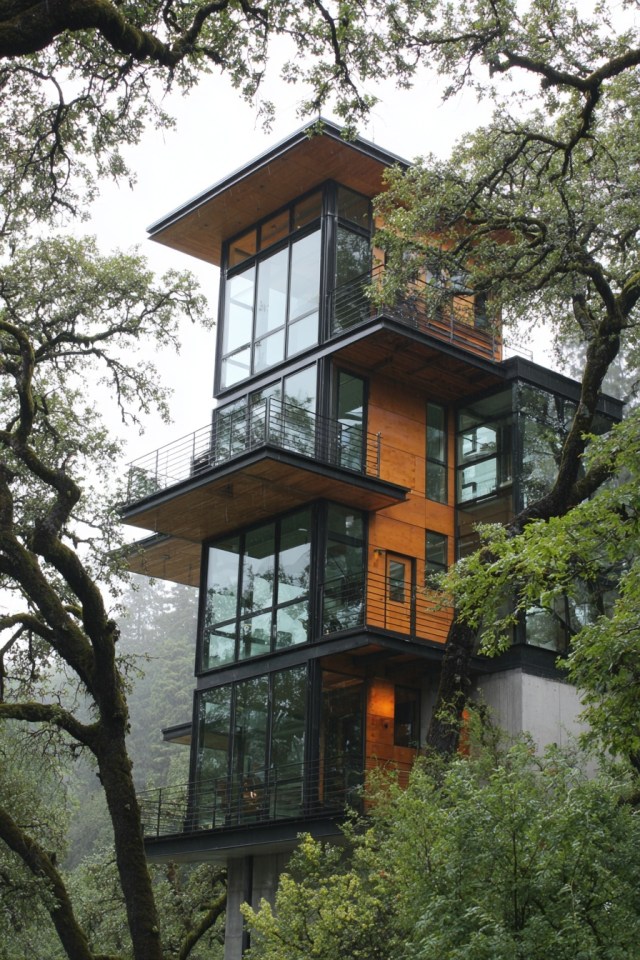

On extremely steep sites where the buildable footprint is limited, a vertical split design forces the house to grow upward, creating a slender, tower-like structure. This strategy maximizes the height, elevating the main living spaces well above the tree line to capture the best panoramic views. Each floor typically features a different functional zone, with glass walls on the outward-facing side that frame the mountains like a series of stacked postcards. This design requires careful balancing but results in a unique, highly vertical living experience that feels like you are living in a treehouse for adults, offering a perspective that is literal, structural, and stunningly aerial.
16.) The Eco-Integrated Modernist


This design marries high-performance, sustainable building practices with a modern aesthetic that celebrates the mountain setting. Utilizing solar panels, high-efficiency insulation, and geothermal heating, the home is a powerhouse of green technology while maintaining a sleek, minimalist exterior. Large, south-facing glass walls capture passive solar heat and provide the panoramic views, while deep overhangs protect the interior from the harsh summer sun. It is a design for the future, proving that modern luxury can be responsible, intelligent, and deeply beautiful, providing a space where you can live in harmony with the mountain environment while enjoying every bit of its grandeur.
A Lasting Blueprint for Your Modern Vista


Embracing a life oriented toward panoramic mountain views is more than a design choice; it is a commitment to a life of daily wonder and seasonal awareness. As you explore these sixteen examples, notice how each residence prioritizes the specific geography of its site, using light, orientation, and material palette to foster a deep relationship with the surrounding heights. Whether you are seeking inspiration for a future build or simply enjoying the architectural artistry of these mountain retreats, remember that the most successful homes are those that fade into the backdrop, leaving the mountains as the true protagonist of the scene. May your vision for your own space be as vast and inspiring as the peaks you dream of calling home.
