
A-frame architecture is rooted in the beautiful paradox of minimalism and comfort. It is about distilling a home down to its most essential structural form, a shelter that is fundamentally protective and efficient, while maximizing the interior volume through verticality and light. By stripping away the clutter of traditional wall structures and focusing on the dramatic lines of the roof, the architect creates an interior that feels incredibly expansive despite a modest footprint. This design approach invites the outdoors in, using the soaring glass gables to frame the beauty of the wilderness like a living piece of art. For the inhabitant, the philosophy is one of intentional living, where the space encourages you to slow down, look upward toward the rafters, and appreciate the raw, natural beauty that surrounds your elevated sanctuary.
1.) The Glass Gable Facade


This design focuses on replacing the traditional solid front wall with a floor-to-ceiling glass gable that spans the entire width and height of the cabin. It effectively turns the front of the house into a giant window, allowing natural light to flood the interior from morning until dusk. By utilizing high-efficiency, multi-pane glass, this design keeps the interior warm and cozy regardless of the weather outside. It is perfect for settings with panoramic views of mountains or lakes, as it provides an unobstructed connection to the horizon, making the interior feel like a seamless part of the grand outdoor landscape.
2.) The Charcoal Timber Exterior


Shifting away from the traditional rustic wood finish, this design employs shou sugi ban or a dark charcoal stain to give the cabin a sleek, modern aesthetic. The deep, moody color makes the geometric lines of the A-frame stand out sharply against the vibrant greens of a forest or the stark whites of a snowy landscape. It creates a bold, architectural statement that feels sophisticated and edgy. Inside, the dark exterior allows the warmth of the natural wood flooring and the light-filled rooms to pop, creating a stunning contrast that feels both cozy and incredibly high-end.
3.) The Extended Gable Deck


By extending the roofline beyond the footprint of the house, this design creates a covered outdoor living area that is protected from the elements. This extension acts as a transitional space, allowing you to enjoy the fresh mountain air even when it is raining or snowing. It is an ideal spot for a morning coffee or an evening fire, providing a bridge between the comfort of your interior and the wild nature outside. This porch area helps to soften the sharp geometry of the A-frame, giving the house a more welcoming and expansive feel that encourages outdoor relaxation.
4.) The Vertical Skylight Spire


Capitalizing on the steep pitch of the roof, this design incorporates long, linear skylights that run from the middle of the slope up to the ridge. These windows bathe the upstairs loft in a soft, ethereal light throughout the day and offer a spectacular view of the stars at night. By placing these skylights over the sleeping area, you create the sensation of sleeping directly under the canopy of the forest or the open night sky. It is a brilliant way to bring light into the deepest parts of the A-frame that might otherwise feel dark or enclosed, adding an airy, open quality to the home.
5.) The Floating Loft Level


In an A-frame, the loft is often the most magical space, and this design elevates that concept by using a cantilevered or semi-suspended floor structure. By keeping the loft slightly separate from the main walls with a glass railing, the space feels like it is floating in the center of the house. This allows light to travel freely between the main floor and the ceiling, maintaining a sense of openness throughout the entire home. It creates a private, serene sleeping zone that feels like a cozy eagle nest, providing a quiet retreat where you can still feel connected to the rest of the cabin.
6.) The Natural Cedar Cladding

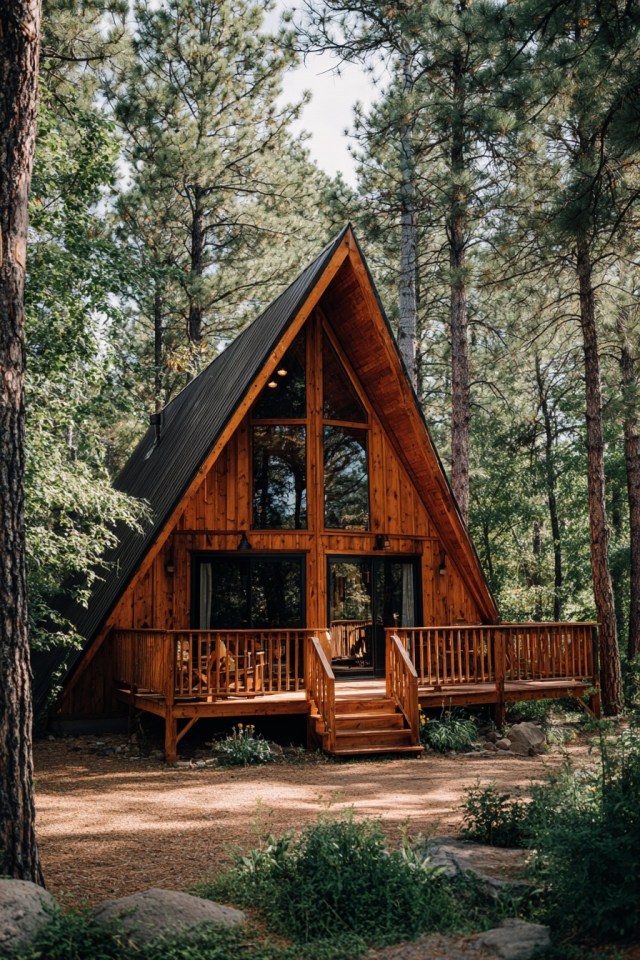
There is something undeniably classic about the warm, honeyed tones of natural cedar, and this design leans into that aesthetic to create a cabin that feels like it belongs in the woods. The wood is treated with a clear, matte sealant to preserve its natural color and grain, allowing the cabin to weather gracefully over time. This choice of material brings an organic softness to the sharp, angular lines of the triangle, helping the structure blend harmoniously into the surrounding trees. It is a timeless look that feels earthy, tactile, and incredibly welcoming, making the cabin feel like a natural extension of the forest environment.
7.) The Split-Level Interior


Instead of a single open volume, this design uses a split-level floor plan to define different living zones within the A-frame footprint. By raising the kitchen and dining area a few steps above the living room, you create a natural division that makes the home feel more structured and intentional. This design is excellent for maximizing functionality in a smaller space, as it allows for clever storage solutions built into the risers of the stairs. It adds visual interest to the interior, breaking up the long, uniform lines of the A-frame with levels that offer different perspectives of the house and the view outside.
8.) The Off-Grid Micro-A


This design shrinks the traditional footprint of the A-frame into a compact, highly efficient micro-cabin that is perfect for off-grid living. Every inch of space is carefully planned, with built-in furniture and smart storage that tucks away when not in use. Despite its small size, the steep roof allows for a comfortable sleeping loft, ensuring that the footprint remains tiny while the living experience remains surprisingly roomy. It is a design for those who want to minimize their environmental impact and maximize their connection to the land, offering a perfect, manageable getaway that is easy to heat and maintain.
9.) The Angled Entryway Vestibule


Often, the front door of an A-frame is exposed directly to the elements, but this design incorporates a dedicated, enclosed entryway vestibule that cuts into the triangular footprint. This serves as a mudroom, providing a crucial space to kick off snowy boots and hang heavy coats before entering the main living area. It helps maintain the thermal efficiency of the house, preventing cold air from rushing into the cabin every time the door is opened. Beyond its functionality, the vestibule adds an architectural layer to the front facade, creating a more complex and interesting shape that greets visitors with warmth and practicality.
10.) The Cantilevered Terrace


To provide even more usable space without increasing the building footprint, this design extends a terrace out from the side of the cabin, cantilevered over the sloping ground. This allows the living space to spill out onto a deck that sits high among the treetops. It is a bold structural choice that creates a dramatic, floating effect, providing a sense of excitement and wonder. This terrace acts as the ultimate outdoor room, perfect for hosting gatherings or simply enjoying a peaceful sunset from a vantage point that feels almost like you are perched on the edge of the world.
11.) The Minimalist White Interior


For those who want to emphasize the geometry of the A-frame rather than the wood, a stark, minimalist white interior is a transformative choice. By painting the walls, ceilings, and beams in a clean, crisp white, you maximize the reflection of light, making the interior feel vastly larger and more open than it actually is. This creates a gallery-like atmosphere where the focus is entirely on the form of the structure and the view outside. It is a modern, clean, and highly sophisticated aesthetic that feels incredibly airy, refreshing, and peaceful, serving as a bright counterpoint to the more rustic exteriors often found in A-frame cabins.
12.) The Solar-Integrated Roof


This design marries the classic A-frame shape with forward-thinking sustainability by incorporating solar shingles directly into the roof structure. The roof is not just a protective cover; it is a power generator that allows the cabin to function independently of the grid. By choosing a dark, low-profile solar tile, the design maintains the sleek, uniform look of the roof while providing modern efficiency. This approach to design shows that you do not have to sacrifice aesthetic or tradition to be eco-conscious, resulting in a home that is as responsible and intelligent as it is beautiful to look at.
13.) The Wrap-Around Deck Structure


While the A-frame shape typically dictates a front-and-back orientation, this design wraps a deck around the sides of the house, connecting to the main entrance. This creates a continuous outdoor path that allows you to follow the sun or find shade depending on the time of day. It effectively expands the footprint of the cabin, making the interior space feel like it is merely the heart of a much larger outdoor experience. The wrap-around deck softens the triangular profile of the house, helping it sit more gently on the landscape and offering multiple access points that enhance the flow between indoor and outdoor life.
14.) The Double-Story Hearth


In the center of the open-plan living room, this design features a towering, double-story fireplace that rises all the way up to the loft ceiling. This massive hearth becomes the literal and figurative center of the home, providing both warmth and a strong vertical anchor to the space. Using stone or modern steel for the chimney stack creates a dramatic contrast with the wood interior, adding texture and weight to the airy structure. It turns the cabin into a cozy, fire-warmed sanctuary during the winter months, making the high, expansive space feel intimate and grounded.
15.) The Metal-Roof Durability


For cabins located in harsh climates with heavy snow or high winds, a metal roof is a practical and highly aesthetic choice for an A-frame. The standing-seam metal provides a sharp, industrial look that accentuates the clean lines of the triangle and offers incredible longevity and protection. It is a low-maintenance solution that keeps the cabin looking crisp for decades. The metallic finish reflects the colors of the sky and the surrounding trees, changing its appearance throughout the day. This choice combines the best of modern building technology with the classic form, resulting in a cabin that is both striking and incredibly resilient.
16.) The Indoor-Outdoor Kitchen


This design focuses on the transition between the kitchen and the patio, utilizing bi-fold or sliding glass doors that completely open up one side of the A-frame. The kitchen counters extend from the interior to the deck, creating a seamless bar or prep area that serves both spaces. This layout is perfect for social gatherings, as it keeps the cook involved in the conversation and allows for easy access to the outdoor grill or dining area. It transforms the cabin into an active, social hub, making the most of every square foot and blurring the lines between the comfort of home and the wild beauty of the outdoors.
17.) The Moody Dark Stain Interior


Moving away from the traditional, airy, light-wood interior, this design uses a moody, dark wood stain for the tongue-and-groove boards on the walls and ceiling. This creates a rich, intimate, and sophisticated atmosphere that feels like a cozy, sophisticated lounge. The darkness emphasizes the silhouettes of the A-frame beams, making the space feel wrapped and protected, which is perfect for an evening escape. When paired with warm, ambient lighting and soft textiles, the space becomes a deeply comforting and luxurious retreat, offering a sense of depth and mystery that is impossible to achieve with lighter, standard finishes.
A Lasting Blueprint for Your Forest Escape


Selecting the right A-frame design is an opportunity to embrace a life defined by simplicity, connection to nature, and an appreciation for architectural clarity. These seventeen concepts are designed to spark your imagination, but remember that the true joy of the A-frame is found in how you adapt its unique, soaring geometry to suit your personal vision of a retreat. Whether you are drawn to the dramatic, glass-walled vistas or the intimate, fire-warmed interiors, your cabin should be a reflection of the peace you seek. As you move forward with your plans, think about how the light moves through your site and how you want to experience the wilderness from the safety and warmth of your home. May your journey toward your own mountain peak be as rewarding as the destination itself.
